Take note: new note-taking facility in Zotero

Over the years, I have been interested in scholarly workflows and, more recently, knowledge infrastructures – for both knowledge workers and young learners.

It has become a hobby for myself to reflect on my own workflows and explore tools that I could add to improve my scholarly practice. I was interested enough in this topic to give a talk on this topic (in Mandarin) last summer.

Annotation software as knowledge infrastructure

Annotation is, and has always been, an important part of knowledge processes.
By Bodong Chen

March 7, 2021

Where is Knowledge Building Analytics Headed?

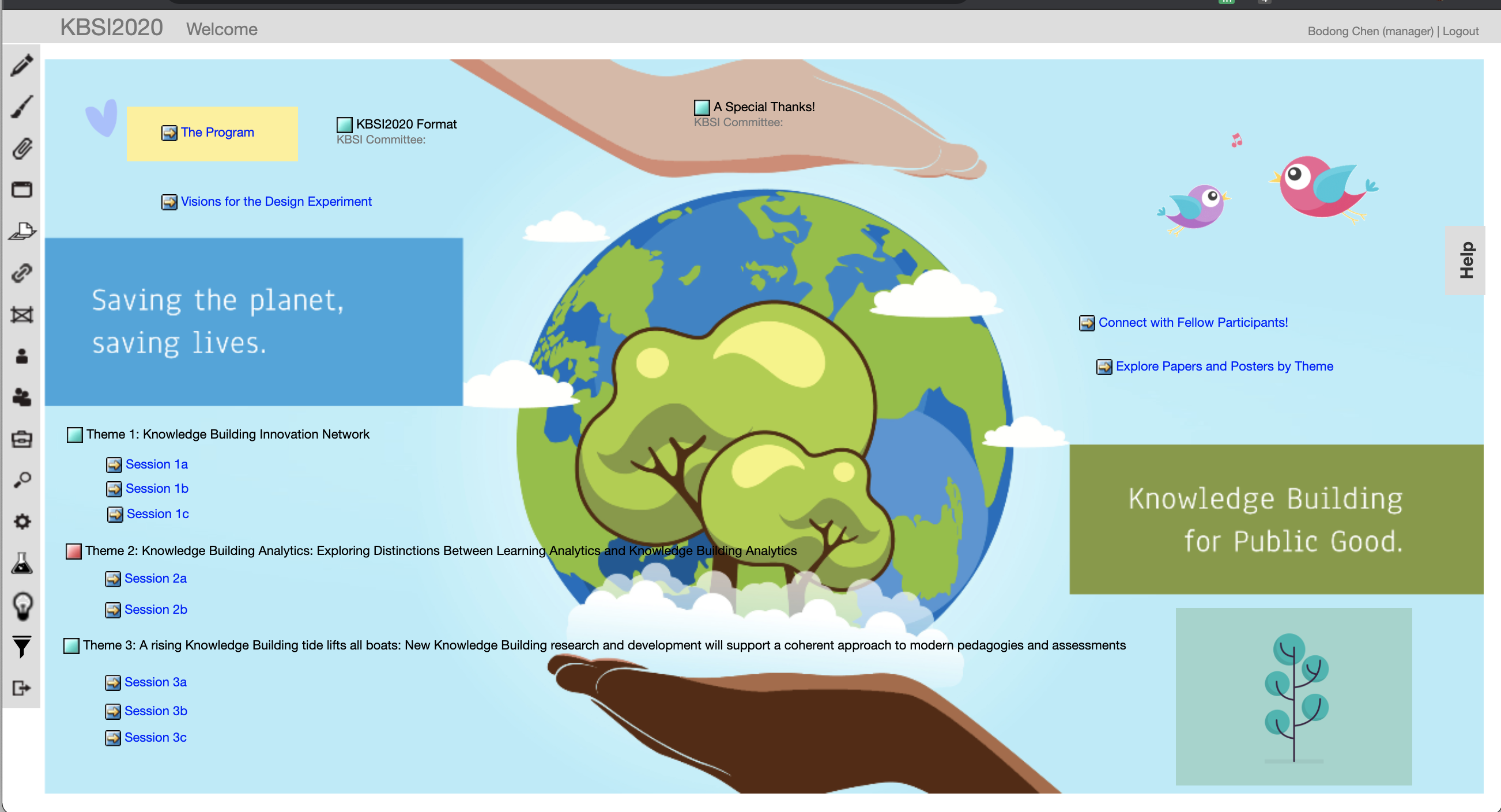
This year’s Knowledge Building Summer Institute (KBSI) is going to be special. First, it’s held near the end of November, for the first time in summer for folks from the Southern Hemisphere. Second, the conference is going to be virtual, following a hybrid synchronous–asynchronous model. Much work will be done in Knowledge Forum asynchronously before interactive sessions in Zoom on the conference days. Last but not least, this year’s conference will feature a global KB design experiment, Saving the Planet, Saving Lives, led by colleagues from Ontario and Singpapore. See conference program here for details.

By Bodong Chen

November 15, 2020

Recognize rigor in learning analytics is multi-faceted

First of all, I’d like to thank our JLA editors-in-chief and SoLAR for organizing this webinar, and more events to come on the topic of rigor. As a community, learning analytics has grown substantially and to a great extent matured since it emerged around 10 years ago. Thanks to tremendous work by colleagues, we have an annual conference, a professional society, an established journal, and probably even more importantly, significant interest in our field from society. For our community to keep growing and evolving, it is time to come up with a set of self-regulating norms around rigor, not only to achieve broader impacts but also to ensure the impacts contribute to the betterment of learning and education.

By Bodong Chen

November 11, 2020

Using Web Annotation for Web Annotation Research

In response to a special call for papers from Information and Learning Sciences, a team of us rallied and wrote a review article about Using Social Annotation in Online Classes ( see preprint). It was an interesting challenge given the short timeframe. But we eventually pulled this off as a team thanks to Xinran Zhu’s strong leadership and everyone’s dedication to this work.

In this blog post, I won’t talk about what we wrote. (You can read the preprint if you are interested.) Instead, I will talk about how we used social annotation to conduct this collaborative literature review about social annotation. My hope is to share our collaborative research practice based on social annotation to those who’re interested.

By Bodong Chen

May 11, 2020

A Map of Collaboration Analytics

In a chapter to be included in the 2nd edition of the Handbook of Learning Analytis, Dr. Stephanie Teasley and I tried to write about Collaboration Analytics in a way that integrate ideas from CSCL, CSCW, learning sciences, and learning analytics. Below is a draft abstract of the chapter. In this post, I am sharing a key message from this chapter – a map of collaboration analytics – and invite you to provide me feedback and suggestions.

By Bodong Chen

April 30, 2020

My Statement of Graduate Advising

Following advice from a fantastic leadership coach from my university, I drafted a statement of advising philosophy in the past summer (yes the summer has already passed in MN).

Here it is!

Please feel free to leave suggestions via Hypothesis annotations.

The other project that I haven’t accomplished this summer is to create a Résumé of Failures. Hope I don’t need to wait for the next summer because that will be a big failure :).

By Bodong Chen in blog

August 20, 2019

A Call for Third-Order Change in Learning Analytics

[Disclaimer: It’s summer time, meaning time for some bold statements.]

“Any educational intervention, for the obvious, common-sense reasons mentioned above, can do harm… ignoring side effects is one of the main reasons for the perpetual wars and pendulum swings in education.” — Yong Zhao (2018)

Education often turns to other disciplines for inspirations. In medicine, precision medicine “takes into account individual variability in genes, environment, and lifestyle for each person” when treating diseases. In business, business intelligence harnesses information and analytics to improve and optimize decisions and performance. All good stuff, right?

By Bodong Chen in blog

June 6, 2019

Automate for Whom?

I have been working at a large public R1 university long enough – 4 years – to witness steady changes with technology installed in public restrooms.

Below is a newly installed automatic paper towel dispenser in our office building. As someone who tends to use 1 paper towel, I was very frustrated by the design that doesn’t keep me – a user – in the loop and forces me to use that much paper.

By Bodong Chen in blog

March 14, 2019

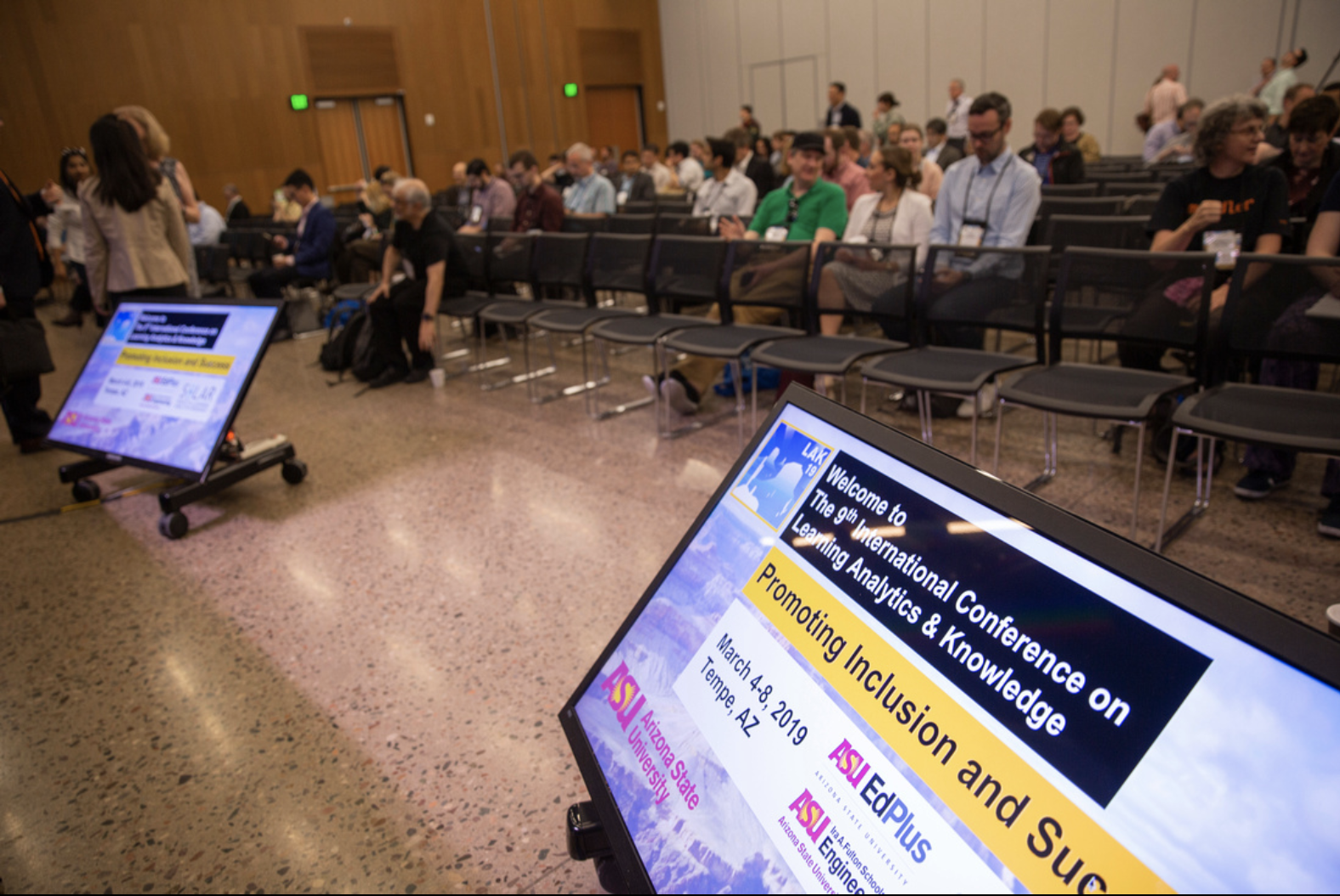
#LAK19 Conference Report [Part 2]: Main Conference

(This is the second part of a report of the #LAK19 conference. See Part 1 here.)

It was the only beginning of many fun conversations when the Main Conference kicked off on Wednesday!

Our conference and program chairs delivered an exciting welcome message.

LAK is becoming larger,

but still selective – with a 33% acceptance rate for Full and Short papers.

By Bodong Chen

March 9, 2019

#LAK19 Conference Report [Part 1]: Pre-Conference Workshops

I just came back from the 2019 Learning Analytics and Knowledge (LAK) conference hosted by Arizona State University. This conference, surely one of my favorites, is inching to its 10th anniversary next year. I still remember when I was in the 2nd year of my PhD in 2010, Chris Teplovs told me about an exciting, upcoming gathering of 60~ people in Banff, Canada to discuss a thing called “learning analytics.”

After nearly a decade of development, we see clear progress this community has accomplished. The growth of the conference size itself, from 60 to 500+ attendees, while impressive, does not speak to the international sensation around this topic. As someone who first attended LAK as a doctoral student in 2014 and now work on a tenure-track position to grow this area at my institution, I can speak to my lived experiences of observing the rise of local interests in this topic (e.g., the “R1” university I’m part of, the state’s Department of Education), as well as an international passion for learning analytics when I travel to Singapore, Manila, and Beijing.

By Bodong Chen

March 8, 2019